Inspection alone does not guarantee manufacturing quality. True quality comes from a controlled and repeatable process supported by reliable measurement systems and actionable data.
This article breaks down the difference between quality assurance and quality control, explaining why process stability, measurement confidence, and manufacturing predictability are essential to long term production success.
There is still a tendency in manufacturing to confuse inspection activity with quality.
More inspection does not necessarily produce better parts. In many cases, it simply means the manufacturing process itself is not fully understood or controlled.
You do not inspect quality into a part.
Quality is created by a stable manufacturing process capable of repeatedly producing acceptable results. Inspection is actually an audit process, assuring you that the process stayed within control long enough to produce a conforming part.
That distinction matters.
A large amount of inspection activity today is still reactive. Parts are manufactured first, measured afterward, and then compared against tolerance. If dimensions drift outside acceptable limits, adjustments are made and production continues.
The problem is that by the time dimensional issues are discovered, additional nonconforming parts may have already been produced. At that point, inspection becomes a sorting operation rather than a process control strategy.
Quality assurance is fundamentally different.
The objective is not simply to identify defects. The objective is to understand the variables within the manufacturing process well enough to prevent defects from occurring in the first place.
That starts at the design stage.
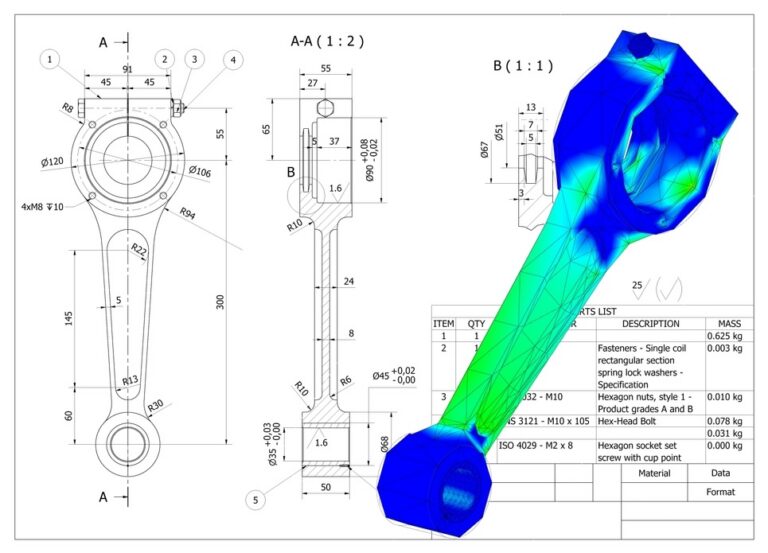
Part geometry, datum structure, tolerance strategy, material condition, tooling access, machine capability, and fixturing all influence whether a part can realistically be manufactured in a repeatable manner. A design may function perfectly on paper while still creating unnecessary instability during production.
Once manufacturing begins, process behavior becomes the focus.
Tool wear changes cutting conditions. Thermal growth affects machine geometry. Fixtures move. Materials react differently under load. Machines drift over time. None of these conditions are unusual. They are normal manufacturing variables.
The difference between stable production and unstable production is whether those variables are understood and monitored before they begin producing unacceptable parts.
That is where metrology becomes valuable beyond simple inspection.
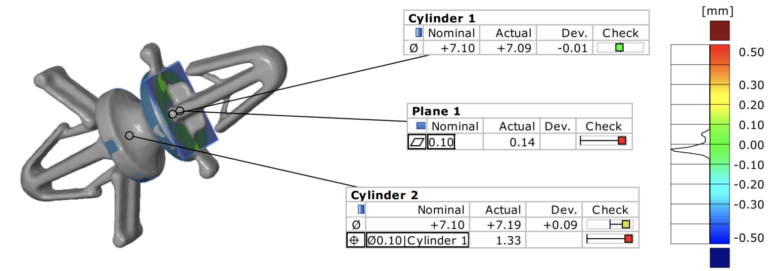
Measurement data should not only determine whether a part passed or failed. It should indicate whether the process itself is beginning to move out of control.
Measurement systems themselves must also remain stable and repeatable.
If variation exists within the measuring system, the data becomes less actionable. Process decisions are then being made using uncertainty generated by the inspection method itself rather than the manufacturing process.
For process control to be effective, the measurement system must maintain significantly greater accuracy and repeatability than the process tolerance being evaluated. While the traditional guideline is a 10:1 measurement-to-tolerance ratio, a 4:1 ratio is often a more realistic expectation for many manufacturing processes while still providing effective process control.
Without that separation, it becomes increasingly difficult to determine whether dimensional variation is being created by the manufacturing process or by the measurement system itself.
Reliable process control depends on reliable measurement data.
This is where statistical process control becomes important. Trend analysis, tool wear monitoring, machine repeatability studies, thermal compensation strategies, and process capability evaluation all contribute to understanding how the process behaves over time instead of evaluating isolated inspection results one part at a time.
In a controlled process, inspection changes roles.
Instead of functioning as a final gate separating good parts from bad parts, it becomes an audit mechanism confirming that the manufacturing process remains stable and predictable.
That distinction also changes how measurement systems are deployed.
In some environments, the highest possible laboratory accuracy may not be the limiting factor. Feedback speed, measurement frequency, environmental conditions, portability, and integration into production may have a greater influence on maintaining process control than absolute measurement capability alone.
The objective is not maximum inspection activity.
The objective is manufacturing stability.
That is ultimately what determines throughput, repeatability, scrap rate, rework, and long term process capability.
East Coast Metrology supports manufacturers with dimensional metrology services, ISO/IEC 17025 accredited calibrations, and measurement solutions designed to improve process confidence and manufacturing stability. From laser trackers and portable CMMs to production support and calibration services, ECM helps customers maintain reliable measurement data across critical applications.
When measurement uncertainty impacts process decisions, experience matters. ECM delivers the metrology expertise manufacturers depend on to support quality, repeatability, and operational performance.